Why refusals happen, and why that is the point
Caribbean Citizenship by Investment Due Diligence, Explained Honestly
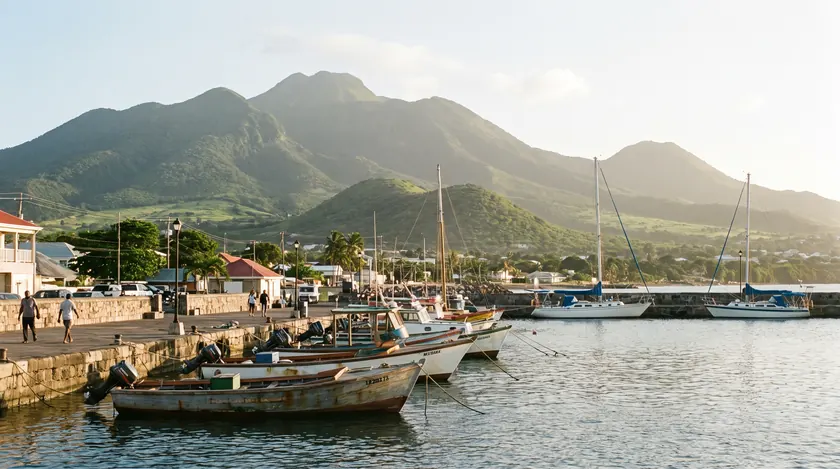
We have watched due diligence stall or sink applications that looked clean on paper. It is rarely the investment itself that causes a refusal. It is a gap in the source-of-funds story, an undisclosed prior visa refusal, or a detail the applicant assumed would not surface. None of that is arbitrary, and none of it is unique to one program: all four Caribbean citizenship by investment programs we work with, St Kitts and Nevis, Dominica, Grenada and Antigua and Barbuda, run a version of the same screening, because the passport at the end of it is only worth what the screening behind it protects.
This guide explains what due diligence actually checks, why refusals happen, how long the process realistically takes, and why a strict process is the reason these passports still open Schengen doors in 2026, even as the European Union keeps pressing the whole category.
What is due diligence in citizenship by investment?
Due diligence is the background investigation every application goes through before a government will grant citizenship in exchange for the investment. It is not a single check. A typical file includes police clearance certificates from every country the applicant has lived in for a meaningful period, verified source-of-funds documentation showing exactly where the contribution money came from, background screening against international sanctions, watchlists and adverse-media databases, and in most cases a mandatory interview.
St Kitts and Nevis requires an interview for the main applicant, conducted by an independent firm on the government's behalf, and from April 2026 added mandatory biometric enrollment as a genuine-link requirement, applied to new applicants and, notably, to people who already hold citizenship from the program. Dominica requires an interview for every applicant aged 16 or older, at $1,000 per interview. Grenada and Antigua and Barbuda assess interview and enhanced due diligence needs case by case rather than mandating them for every file. All four require the application itself to be filed through a government-licensed agent; Gold Visa World works as an advisory desk that structures the file and coordinates with the licensed agent of record, and we do not represent ourselves as that licensed agent.
Why do Caribbean citizenship by investment applications get rejected?
We see the same handful of reasons repeatedly, and almost none of them are about the money itself.
- A gap in the source-of-funds trail: money that moved through an account or entity the applicant cannot fully document, even where the funds are entirely legitimate.
- An undisclosed prior visa refusal from the US, UK, Canada or a Schengen country. Programs treat non-disclosure of a known refusal far more seriously than the refusal itself.
- A criminal record or ongoing investigation the applicant did not mention, discovered independently through screening rather than volunteered on the form.
- Politically exposed person status, or fund sources tied to sanctioned entities or restricted sectors, which triggers enhanced due diligence and, in some cases, refusal outright.
- Inconsistencies between the application and independent verification: addresses, employment history or business ownership that does not match public or commercial records.
Why strict screening protects the value of the passport
This is the part of due diligence that is easy to resent in the moment and easy to miss the point of. A Caribbean passport is only as valuable as the countries that grant it visa-free access believe the screening behind it to be. That is not an abstract point in 2026: it is the entire basis of the European Union's current pressure on these programs.
The European Parliament voted 518 to 96 on 7 October 2025 to tighten the mechanism the EU uses to suspend Schengen visa-free access, specifically naming citizenship by investment as a category that can itself justify suspension. On 25 June 2026, the European Commission wrote to St Kitts and Nevis, Dominica, Grenada, Antigua and Barbuda and St Lucia, asking them to phase out CBI entirely by 1 June 2028 and, in the meantime, to tighten due diligence, including excluding EU-sanctioned individuals, by September 2026. As of this writing, all five governments remain visa-exempt for the Schengen area, no suspension has been imposed, and the Commission's next review is due in December 2026.
Every refusal that screens out a genuinely risky applicant is, in a direct sense, a program defending its own visa-free access for every other citizen who holds that passport legitimately. We say this to clients who find the process slow or invasive: the alternative, a program that waves everyone through, is the version of this industry the European Union is actively trying to shut down. We flag this explicitly for Nigerian and Pakistani clients, since prior US, UK, Canadian or Schengen refusals are common in both applicant pools and are exactly the kind of fact that must be disclosed upfront, not discovered.
Prefer to just ask? Send a short message, we reply the same day.
Ask a questionHow long does Caribbean CBI due diligence take?
Realistic ranges, not marketing timelines. St Kitts and Nevis publishes a target of approval in principle within 120 to 180 days of a complete application being acknowledged, the fastest published figure among the four. Grenada's own guidance cites roughly 3 to 6 months from a complete file, and Antigua and Barbuda's National Development Fund route runs a similar 3 to 6 months. Dominica typically takes 6 to 9 months, and enhanced due diligence, triggered by a higher-risk profile, can add another 3 to 6 months on top of any of these, an industry-reported range rather than an official government service-level agreement.
The single biggest factor inside an applicant's control is the completeness of the file at submission. A due diligence team that has to chase missing bank statements, or ask a second time for a source-of-funds explanation, is not moving faster because the applicant is in a hurry; incomplete files simply queue behind complete ones.
Frequently asked questions
Does a prior visa refusal affect a citizenship by investment application?
Yes, and disclosure matters more than the refusal itself. A prior US, UK, Canadian or Schengen visa refusal is a known, common event that due diligence teams see regularly and can usually work around if it is disclosed and explained upfront. Discovering an undisclosed refusal independently during screening is treated far more seriously, since it raises a credibility question about the rest of the file, not just that one fact.
What is enhanced due diligence (EDD)?
A deeper screening tier applied to higher-risk profiles: politically exposed persons, applicants whose funds trace back to jurisdictions or sectors that carry more scrutiny, or files where the initial check raises a question the standard process cannot resolve. EDD typically adds 3 to 6 months to the standard timeline and may involve additional fees, on top of the base due diligence charge every applicant pays.
Can you appeal a rejected citizenship by investment application?
Formal appeal mechanisms are limited and vary by program; a refusal is generally not a decision a government reverses on request. In practice, most rejected applicants reapply later once the underlying issue, a documentation gap, an undisclosed matter now properly disclosed, is resolved, rather than contesting the original decision. Confirm the specific appeal or reapplication path with a licensed agent for the program in question before assuming either option is available.
Can a licensed agent guarantee my application will be approved?
No, and be cautious of anyone who says otherwise. Due diligence is conducted by the government's own unit or its appointed independent screening firm, not by the agent preparing the file. A good agent structures a complete, accurate application and flags issues before submission; approval itself is a government decision, and we do not represent it as guaranteed to any client.
What documents does a Caribbean citizenship by investment application typically require?
Certified passport copies, police clearance certificates from every country of residence over a set threshold, bank statements and source-of-funds evidence, proof of address, and a medical certificate in most cases, gathered into one file for the government's due diligence unit or its appointed screening firm. The exact list varies slightly by program; a licensed agent will confirm the current checklist before you start gathering documents.
Worried something in your file might raise a flag
Tell us the specific situation, a past visa refusal, a complex income source, and we will tell you honestly whether it is workable before you spend on an application.
Ask a question